
Can Resistance Bands Help Prevent Sarcopenia?
As we get older, many people notice they’re not quite as strong as they used to be.
Getting up from a chair takes more effort. Carrying shopping feels heavier. Climbing stairs leaves you more out of breath.
Many assume it’s “just getting older.” In reality, it may be sarcopenia.
What Is Sarcopenia?
Sarcopenia is the age-related loss of muscle mass, strength and physical function. While some muscle loss is a normal part of ageing, becoming significantly weaker isn’t inevitable.
Without regular strength training, adults can gradually lose muscle over time, making everyday activities more difficult and increasing the risk of falls, fractures and loss of independence.
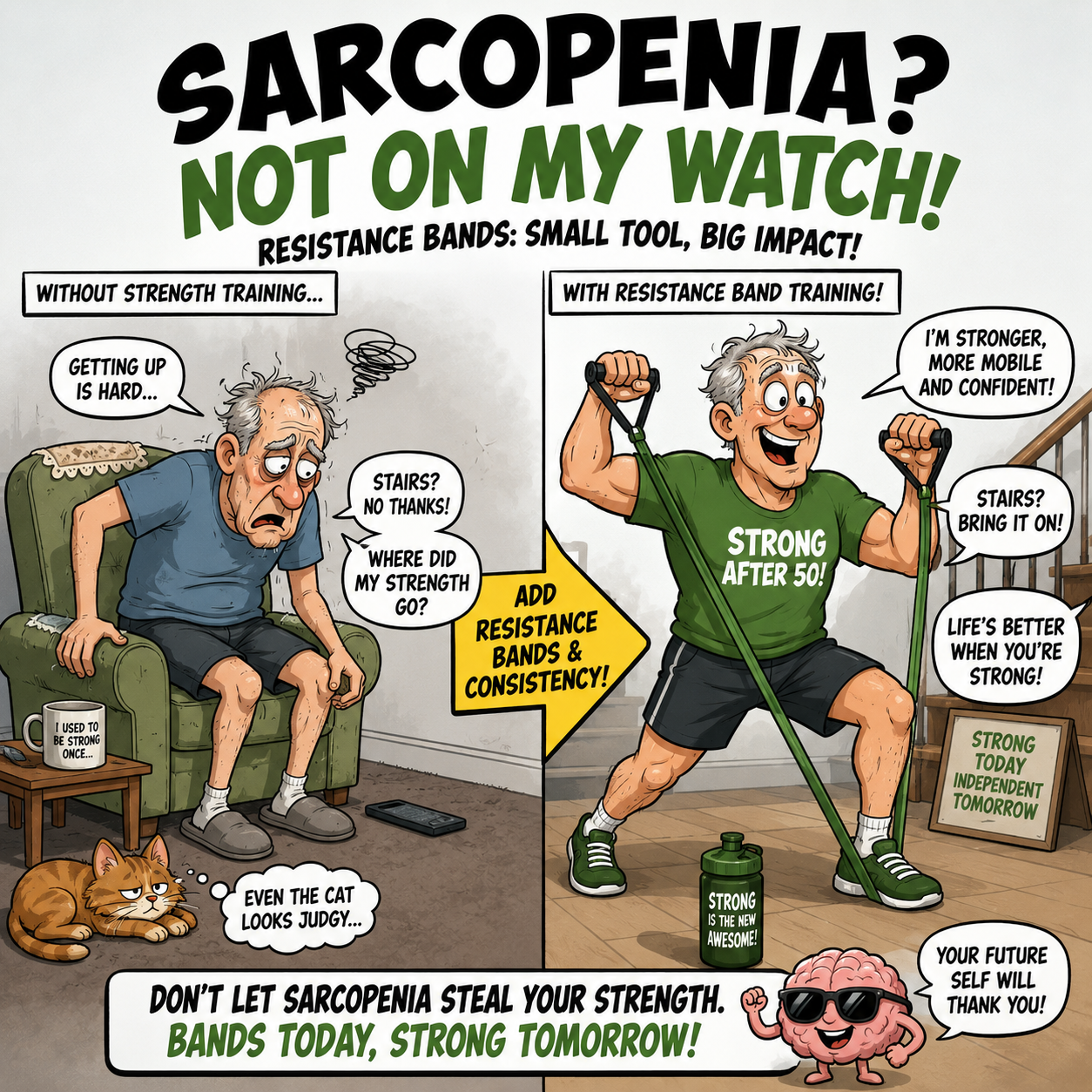
Why Muscle Matters
Muscle isn’t just about looking toned.
Healthy muscle helps you:
- Walk with confidence
- Climb stairs more easily
- Carry shopping
- Play with grandchildren
- Improve balance
- Protect your joints
- Support healthy blood sugar levels
- Stay independent for longer
The stronger you are, the easier everyday life becomes.
Can Resistance Bands Build Muscle?
Absolutely.
Research has shown that resistance band training can improve muscle strength and increase muscle mass, particularly in older adults and those new to strength training.
Bands work by providing resistance throughout the movement. As your strength improves, you simply increase the resistance, repetitions or exercise difficulty—a principle known as progressive overload, which is essential for building muscle.
This means you don’t need a room full of gym equipment to get stronger.
Why Resistance Bands Are Ideal After 50
Resistance bands offer several advantages:
- Gentle on the joints
- Suitable for beginners
- Portable and inexpensive
- Easy to use at home
- Effective for full-body strength training
- Easy to progress as you become stronger
For many people over 50, they’re an excellent alternative to traditional gym equipment.
Strength Training Is the Best Defence
Current exercise guidelines recommend adults perform muscle-strengthening activities at least twice a week.
Combined with adequate protein intake, regular walking or other physical activity, and good sleep, strength training is one of the most effective ways to maintain muscle and independence as you age.
It’s Never Too Late
One of the most encouraging findings from research is that people in their 60s, 70s, 80s and beyond can still make meaningful improvements in strength with regular resistance training.
Your muscles continue to respond when you challenge them consistently.
The goal isn’t to become a bodybuilder.
It’s to make everyday life easier, stay independent, reduce your risk of falls and continue doing the things you enjoy.