
Why Yo-Yo Dieting Makes You Feel Hungrier: Understanding Ghrelin
Have you ever lost weight, only to put it all back on again?
You’re not alone.
Many people blame themselves when a diet doesn’t last, but there’s an important hormone that often gets overlooked: ghrelin.
What is Ghrelin?
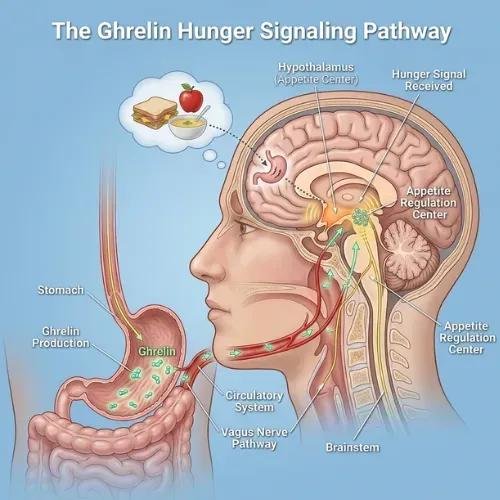
Ghrelin is often called the “hunger hormone.”
It’s produced mainly in your stomach and sends a signal to your brain that it’s time to eat.
Normally, ghrelin rises before meals and falls after you’ve eaten. It’s part of the body’s natural way of regulating appetite.
Above image The Ghrelin signal path to the brain infographic near the start.
Why crash diets don’t work
hen you drastically cut calories or follow a very restrictive diet, your body sees it as a threat.
In response, ghrelin levels increase.
This means:- You feel hungrier more often.
- Food becomes harder to stop thinking about.
- Cravings increase.
- Sticking to your diet becomes much more difficult.
The yo-yo dieting cycle
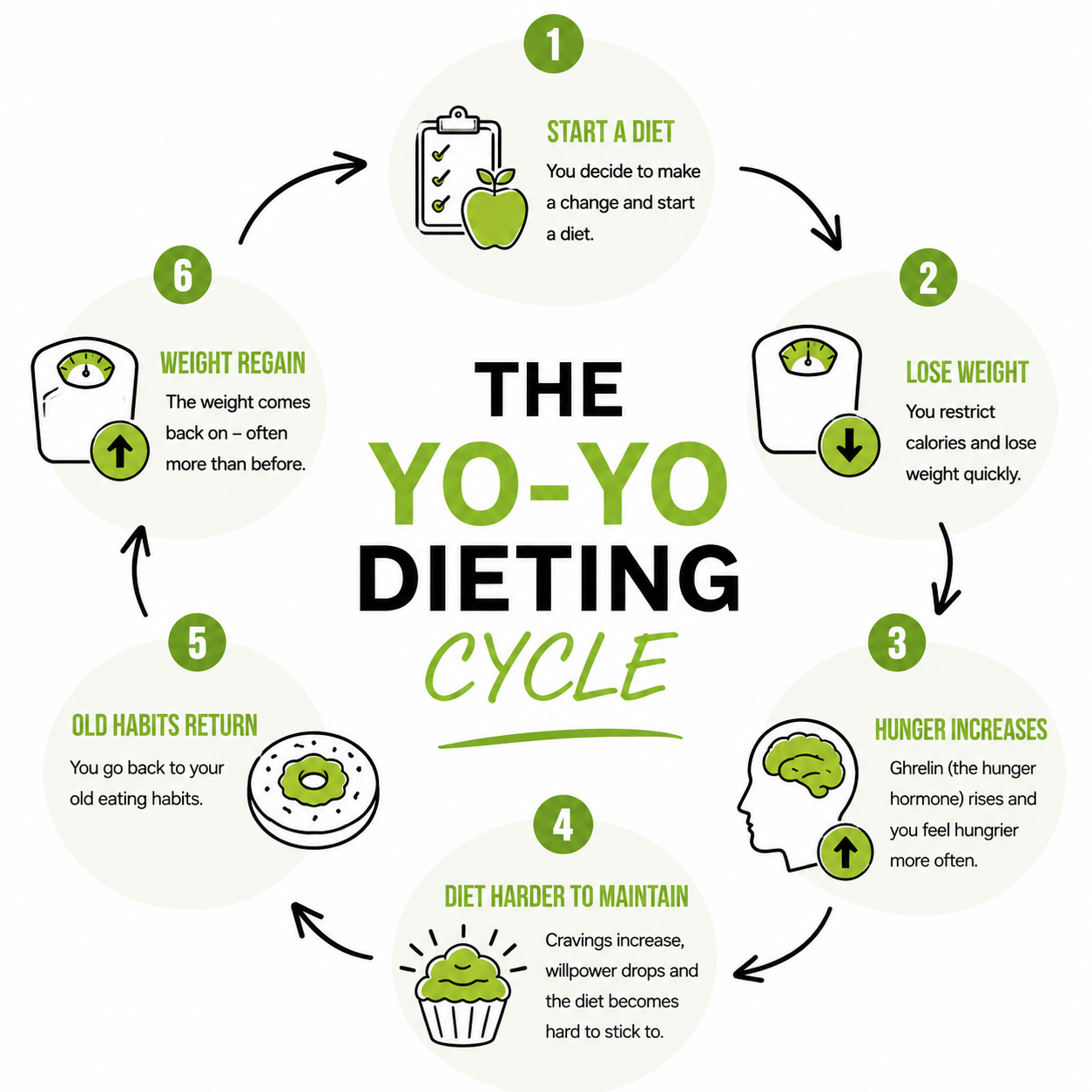
Many people experience this pattern:
- Start a strict diet.
- Lose weight quickly.
- Hunger increases.
- The diet becomes difficult to maintain.
- Old eating habits return.
- Weight is regained.
The cycle then repeats, often leaving people feeling frustrated and believing they’ve failed.
In reality, the approach—not the person—is often the problem.
As referred to in the image, the yo yo dieting cycle explained.
How to work with your body instead
Rather than trying to lose weight as quickly as possible, focus on building habits that you can maintain.
Some simple strategies include:
- Aim for a moderate calorie deficit instead of an extreme one.
- Include protein with each meal to help you feel fuller for longer.
- Eat plenty of fibre from vegetables, fruit, beans and wholegrains.
- Strength train two or three times each week to help preserve muscle while losing fat.
- Get enough sleep, as poor sleep can affect hunger hormones.
- Choose an approach you can realistically maintain for months, not just weeks.
Strength training and sustainable weight loss
One of the biggest mistakes people make is relying on endless cardio while eating too little.
Strength training helps preserve muscle during weight loss, supports your metabolism, and improves overall health. Combined with sensible nutrition, it’s a far more sustainable approach than crash dieting.
Final thoughts
If you’ve spent years bouncing from one diet to another, you’re not weak and you’re not lacking motivation.
Your body is designed to keep you alive, and hormones like ghrelin are part of that process.
The goal isn’t to fight your body—it’s to understand it.
When you focus on sustainable nutrition, regular movement and strength training, losing weight becomes less about willpower and more about building habits that last.
If you’re tired of yo-yo dieting and want a simple, realistic approach to improving your health, I’d be happy to help. Whether you’re looking to lose weight, build strength or simply feel more confident, my coaching focuses on practical habits that fit around real life—not quick fixes.